Your cart is empty
bookmark toolkits   bookmark best practice   bookmark passCQC   bookmark KLOEs   bookmark library of regulations   bookmark cqc registration

Login for FREE access to resources

I have an account
I don't have an account


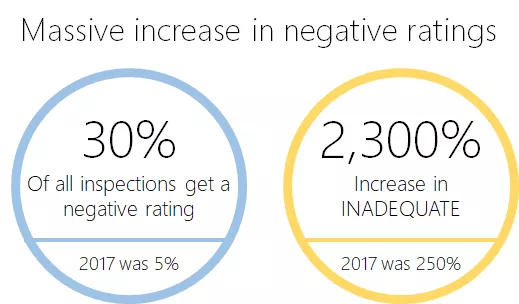
Prepare for new inspection regime to avoid negative ratings

pass cqc increase in negative ratings

A warning shot for Providers

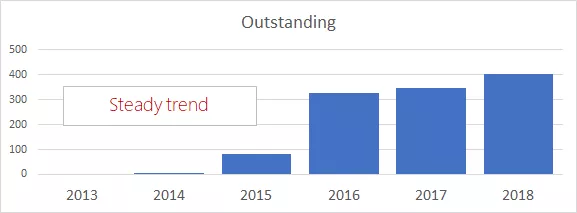
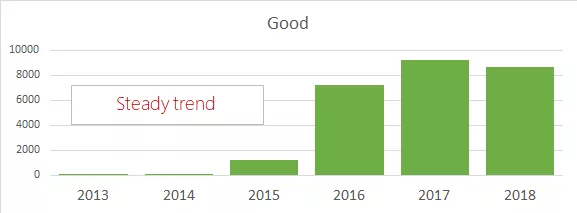
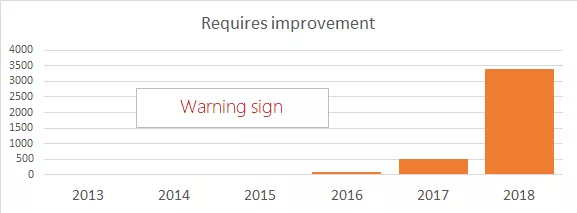
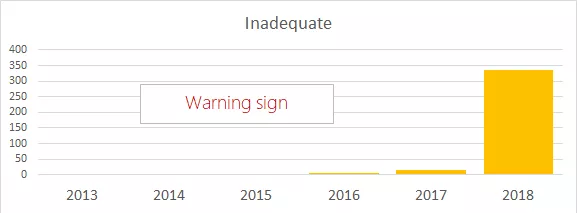
  • More Providers got negative ratings than in all of the previous years combined

  • Over 3,700 areas got marked as Requires Improvement or Inadequate

  • New KLOE regime has now kicked in


Overview of all ratings : Note the spike in bad ratings

 pass cqc ratings trend outstanding  pass cqc ratings trend good
 pass cqc ratings trend requires improvement  pass cqc ratings trend inadequate


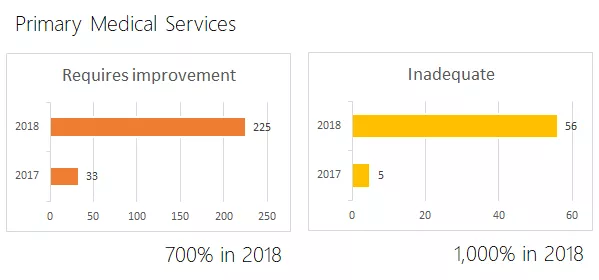
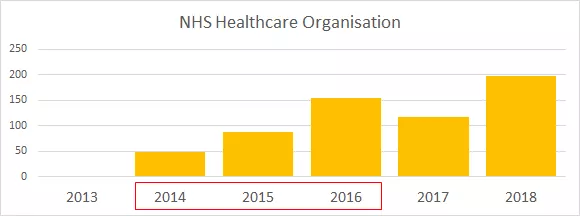
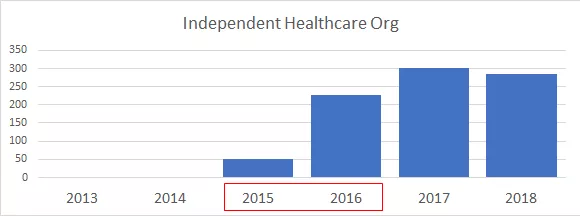
 Primary Care: Hundreds more poor reviews

 
 pass cqc primary medical requires improvement  

Almost 9,000 GPs and Dentists were inspected under the old KLOE rules. This is what they can get caught out on:-

  • Inspections regime changed in 2017, you need to be prepared for new KLOEs
  • Virtually everything you based on old KLOEs at the last inspection is invalid
  • Providers who have not kept up to date face a significant amount of work
 

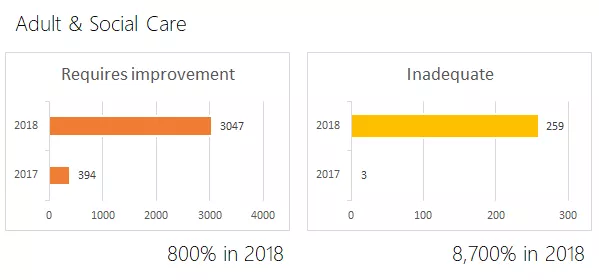
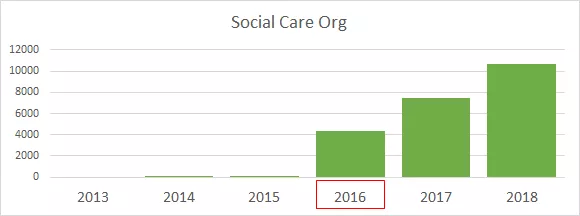
Adult Social Care: Thousands of poor reviews

 
 pass cqc adultcare requires improvement


Inspections are transitioning from checking processes to auditing actual care.

What gets caught out:-

  • Providers who waste time on policies instead of care
  • Poor care plans
  • Poor risk assessment
  • Poor evidence of compliance
 

Inspection Trends: Who's next

CQC care homes

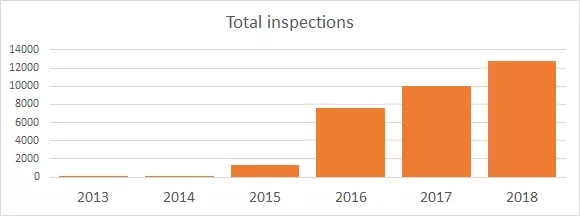
The first leg of CQC's inspections was to visit every provider, this is largely accomplished and virtually all providers have now been inspected at least once.

pass cqc inspection trends total all inspections

Next Phase

  1. Routine re-inspections start all over again, and Providers will be expected to be better prepared.
  2. Focused or targeted visits where there are specific concerns

You will be on the radar if:-

  • Complaints are made against you
  • Whistleblowing by employees who are concerned about your standards
  • Whistleblowing by disgruntled ex-employees
  • Serious incidents that warrant attention
  • Entire Groups, Federations, Franchise operations: If your members expose systemic faults
  • Note: Changes in Registration details may reclassify you as a "new" uninspected location

 When was your last inspection?


Your next inspection will depend on the date of your last one.
2013 to 2015: A re-inspections is an almost certainty.
2016: Re-inspection cycle has started.
2017 and 2018: Poor clinical performance and smaller Providers puts you at risk


Whistleblowing, incidents and complaints pose the highest risk in triggering an inspection.
Groups need common standards and quality management to avoid inspections escalating into a wider investigation.
Franchise operations face a particular level of risk.


This is a high risk category due to the volume and nature of services, subject to higher scrutiny and almost 50% have already undergone multiple inspections.

Providers with only one inspection so far and poor clinical performers are at the highest risk of an inspection


Less than 10% have had a second visit.

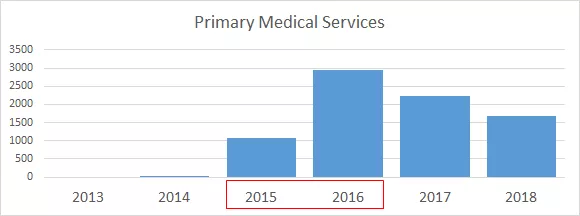
Providers inspected in 2015 and 2016 are prime targets for a re-inspection.

Whistleblowing, incidents and complaints pose the highest risk in triggering an inspection.

Staying one step ahead : Grade yourself

CQC inspections have slowly moved from the initial learning process towards corporate governance and accountability.

Preparing for your next inspection

  1. Review your last inspection and see where you are in the inspection map below.
  2. Then look at the next stage, and you can prepare for that.
  3. If the inspector repeats the same stage as last time, this might be that you haven't progressed enough and might face difficulties.

Map of inspection stages

 Quick guide to colour coding: Green means the inspector spent less time on this because you are expected to have achieved this, and may perform random checks to ensure compliance
cqc inspections future trends key

1st Stage: Fundamentals

  • Have you got basic rules for operating the organisation
  • Is everyone aware of the rules
  • Do you record activity
 cqc inspection trends 1

2nd Stage: Operations

  • Record of activity, and completeness
  • Basic staff competency, recruitment processes and appraisals
 cqc inspection trends 2

3rd Stage: Monitoring

  • Staff training and development, awareness of key safety areas, knowledge
  • Management competency, Good governance, oversight of operations
 cqc inspection trends 3

cqc inspection trends old new

4th Stage: Care

  • Governance and accountability of officers
  • Standards of care, Involvement in care, Consent
 cqc inspection trends 4

5th Stage: Actual Performance

  • Engagement with stakeholders, joined up care
  • Outcomes achieved, comparisons and benchmarks
 cqc inspection trends 5
 

Final Stage: Maturity

The CQC is moving towards online self-declarations and targeted site visits. The old PIR (Provider Information Request) will be replaced with an annual online Provider Information Collection report (PIC).

CQC will target Providers based on their declarations and intelligence gathered from other sources. Whistleblowing will become more important in trigger inspections.

cqc inspection trends 6

Future: CQC becomes part of the NHS

The CQC is likely to reinvent itself and may seek a change in legislation. The transformation has already started:-

  1. Inspect all providers [done]
  2. Extend to inspect owners of Groups [2018/2019]
  3. Extend to inspect Complex Providers [2018/2019]
  4. Invent NEW role: Inspect CCGs and Commissioning [In motion since 2014]

“….. we need to be able to look at how the system operates, not by being invited to do reviews but in it being part of the routine way we do our business. I think that requires legislative change.”

Sir David Bevan

May 2018

This process started in 2014

According to an interview given by Sir David Bevan on 20th March 2015, the process started 12 to 18 months before that interview.

The CQC is looking to become an “embedded regulator” in the system and commissioning so that they inspect 24/7/365 from inside the system instead of being “invited to inspect”.

In essence, CQC will become internal auditors, and part of the NHS and yet independent from other employees, thus guaranteeing its survival for as long as the NHS exists.

CQC Legislation Background

Health and Social Care Act 2008 - Chapter 14 Home (20141112)

  1. Defines regulated activities
  2. Establishes the Care Quality Commission
  3. Lays out the rules for registration
  4. Lays out the penalties for non-compliance
  5. A Registered Manager can also be fined

Health and Social Care Act 2008 (Regulated Activities) Regulations 2010 (Click here for the Legislation)

  1. Lays out the rules to be followed by registered persons - this is the actual law
  2. Defines the dates for registration to commence (1st April 2010)
  3. Defines fixed penalties and how they should be imposed
  4. Penalties stated as being from £300 to £50,000 depending on seriousness of offence
  5. Offences by a Registered Manager carry specific fines

Care Quality Commission (Registration) Regulations 2009 (Click here for the Legislation)

  1. Lays out the rules for the registration process (how you should register)
  2. Lays out their powers to force you to supply information in support of the registration
  3. More rules on what to do if there are changes in the details of the applicant

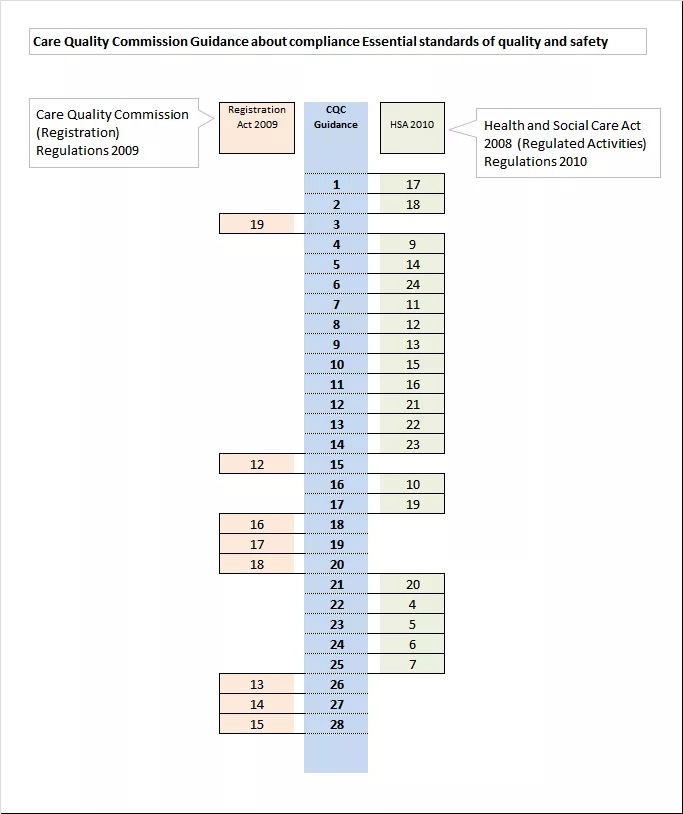
Care Quality Commission - Guidance about compliance

Essential standards of quality and safety (Click here for this publication)

  1. Guidelines set out by the CQC based on the above Acts
  2. Repeats the regulations above in a different sequence as "Outcomes" e.g. Outcome 1 relates to Regulation 17; Outcome 7 relates to Regulation 11 ... etc.
  3. Introduces a concept of "Prompts" or guidance on how to achieve the regulation
  4. The Prompts are not actual regulation but are used by the CQC as an indicator of whether they think you have taken reasonable steps




One minute overview of the Single Assessment Framework

In a nutshell

Expert in a single day:

  1. If you are already familiar with the old system, all you need to read are the actual Quality Statements pages.

  2. Ignore the Regulations and Best Practice as you will already be familiar with this
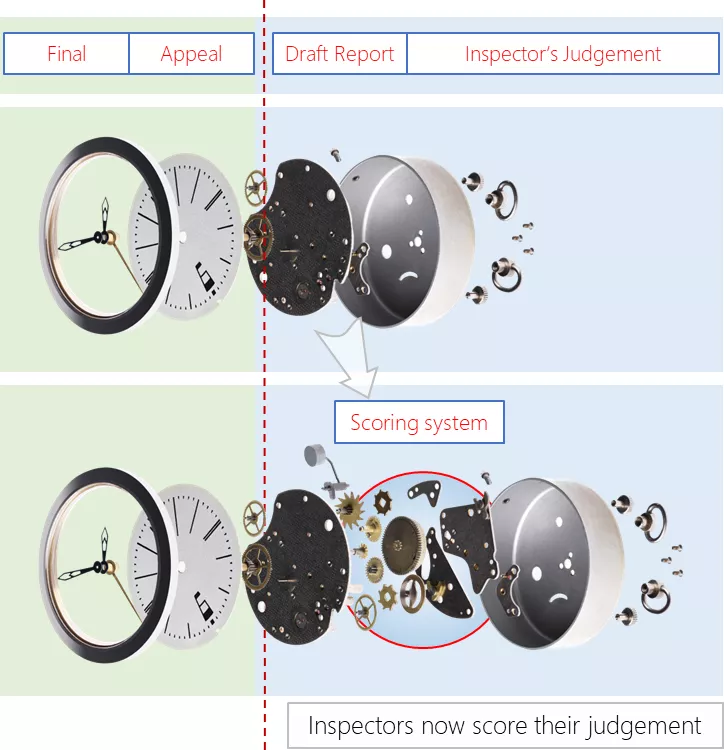
  3. Ignore the scoring system, this is for the inspectors to rate their findings, you have no control over this until an actual inspection/assessment
 

Key takeaways for the Single Assessment Framework

2 to 5 year transition period

  1. SAF is being introduced in a phased approach, with partial audits for up to 5 years
  2. Full transition from old KLOE reports to Full SAF audits is likely to take 5 years or more

Don’t waste time on learning the scoring system

  1. Subjective – hard to anticipate
  2. Hybrid system, inspector can add new checks
  3. Under review by Government – might change yet again

There are 15 Frameworks

  1. 15 Sectors each with a custom framework
  2. Cannot compare providers in the same sector OR between sectors
  3. The scoring system will mean very little to providers

One rule for inspectors another for Providers

  1. Inspector can do a partial inspection ranging from 1% to 100% of the evidence categories
  2. BUT you still have to prepare for 100% of the  204 categories just in case

Same same but different

  1. KLOEs : Hundreds of measuring points, impossible to check in a short 1-2 day inspection, so every inspector had their own mini-checklist
  2. Single Assessment Framework: Same potential problem, different list
 
The scoring system is for Inspectors
 SAF ratings system changes

Subcategories

New Single Assessment Framework 2024

Library of Regulations

Your Organisation CQC-Ready Anytime

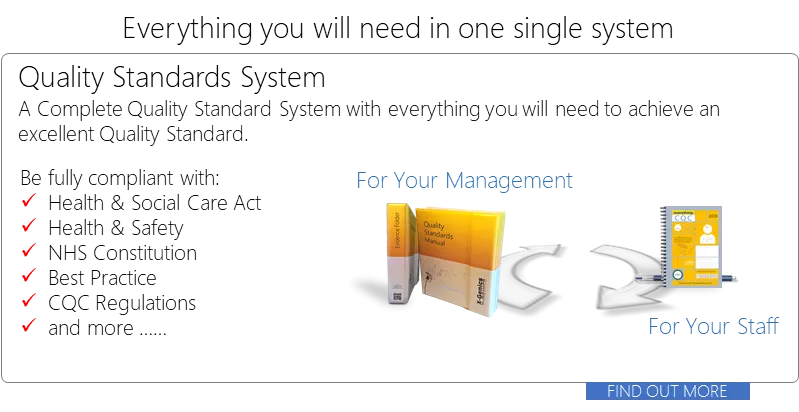
quality standards system complete solution
 

our products focus on quality unifying standard

quality standards system can it get any simpler
 
×

Login to your account

Don't have an account? Register Now