Your cart is empty

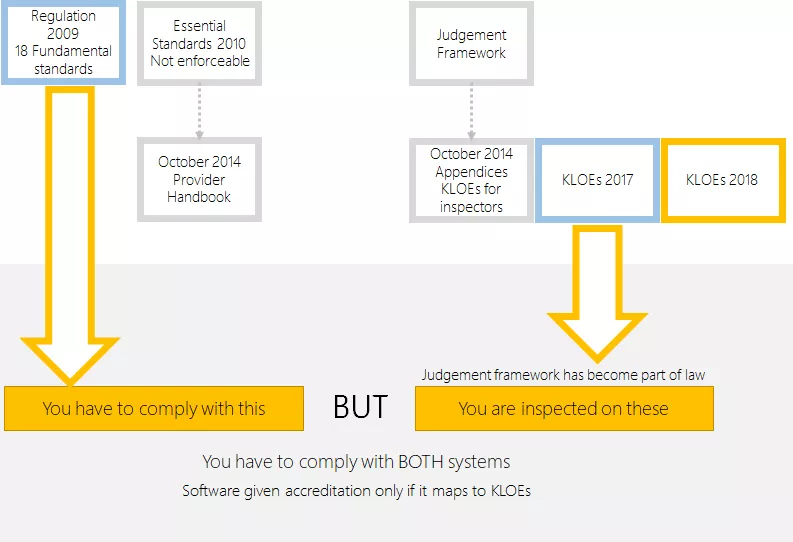
There is a difference between the Regulations and mandated Guidelines Vs a manual for inspectors on how to conduct audits and rate Providers

The first carries legal weight, and is the basis of prosecutions, fines, or removal of the licence to trade, whereas the guides are designed to ensure inspectors work in a methodical and consistent manner to form an opinion.

The original “prompts”, the KLOEs, and the Single Assessment Framework fall in the category of internal guidelines for inspectors, however, the conclusions from those can be used to assess whether the Provider was compliant with the regulations.


Quote from the original Essential Standards (2010)

The legal status of our guidance for providers
Although we must take it into account when making decisions about a provider’s compliance with the regulations and in tribunals and courts, the guidance is not enforceable in its own right. In that document, the guides were described as "prompts" to emphasise the fact that these were not part of the regulation.

The problem with KLOEs

Health and Social Care Act was not even mentioned in KLOEs

  • KLOEs were not regulations
  • They had no legal basis
  • They were not enforceable
  • They were not quoted in inspection reports

If a full inspection was carried out strictly based on all the KLOEs, each inspection would take 10 days or more. Few inspectors, if any, used this as a basis of an inspections.


Single Assessment Framework

Before this Framework, ratings were pure judgement and opinion of the individual inspector.
The main objective of this framework is to standardise and bring some level of consistency to the way inspectors measure and rate each of the Quality Statements.
It is s till an opinion based assessment, but now adds a layer of 6 Evidence Categories, which are given a score and then aggregated.

  • The Quality Statement represent what the inspection team will look for
  • The related Regulation is identified
  • Best Practice is suggested for each


Dilemma for Providers

You have to comply with the HSCA Regulations but you cannot ignore the methodology used by the Regulator to reach their conclusion. In essence, the Provider ends up with having to complying with two sets of rules.

The inspector carries out two separate jobs at an inspection:-

  1. A subjective rating of your services
  2. An objective/legal judgement whether you are complying or in breach of the Regulations

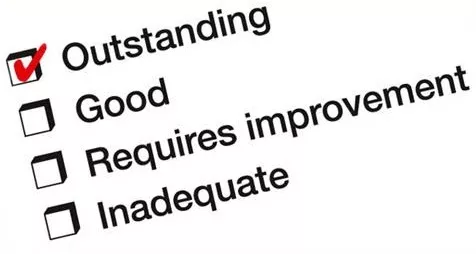
Being rated as “inadequate” is not desirable, but only has a direct impact on your registration if you are ALSO found to be in breach of a regulation.
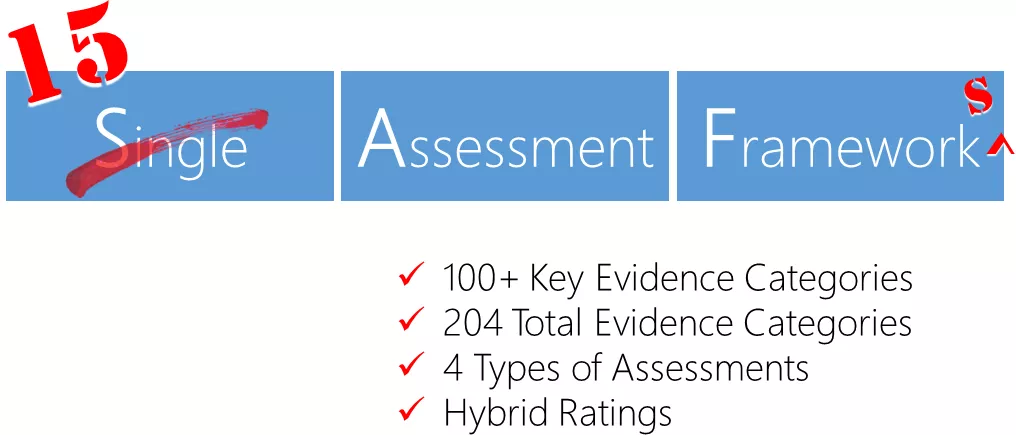
This section contains a detailed breakdown of the Single Assessment Framework

Everything is NOT as it seems.

  • Far from being a simple and single framework, this is a complex rating system, which is hard to understand.
  • There are actually 15 frameworks and sub-frameworks, for different provider types
  • In this section, you will learn why it has no meaningful impact on your organisation and why it is not worth spending time on
 SAF 15 or Single assessment framework
  

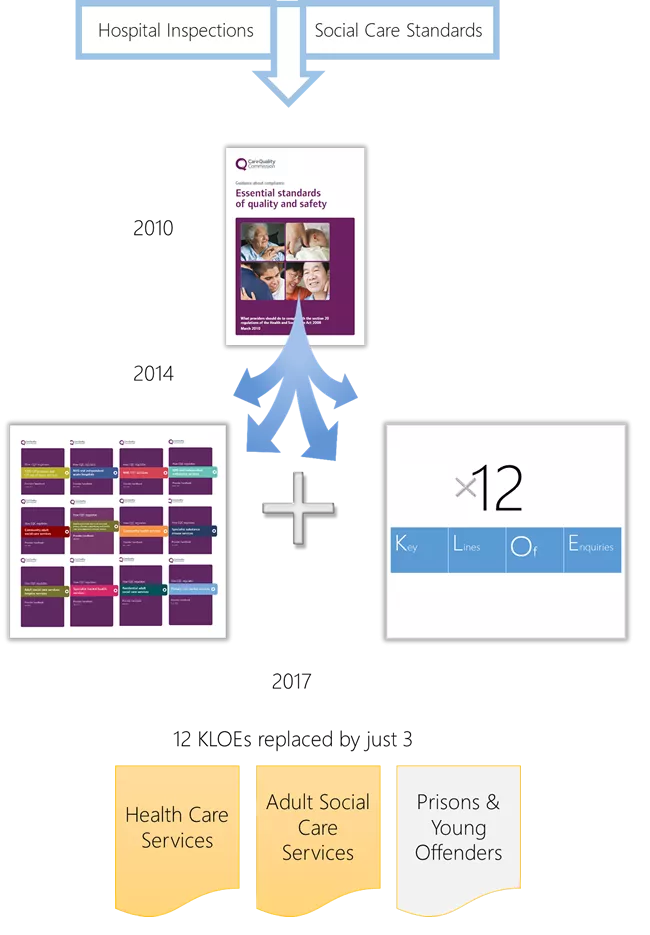
 Brief history of Regulations, KLOEs, and Assessments

CQC Regulations have now changed beyond recognition from the first days of introduction. We started off with regulations, assisted by a guideline from the CQC, which said "the guidance is not enforceable in its own right".

The prompts have turned into KLOEs, which are now the basis of every inspection and the provider's rating. In essence, you cannot pass an inspection unless you comply with KLOEs. The KLOEs have become the new defacto regulations.

 inspections history

 inspections regulation vs kloe
 

GP Federations and Complex Providers

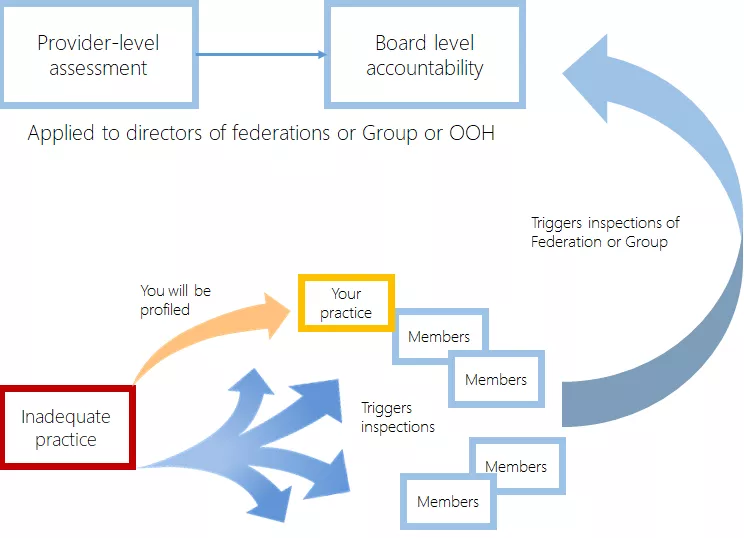
CQC is changing the way providers who are part of a Group are monitored and inspected. This covers anyone in a Groups or part of a service organisation such as an OOH and for GPs, any GP Federation, super practices, and multi-specialty community providers.

inspections provider level


A Quick summary

Any organisation working as a group/community will be treated as one single Accountable Care Organisation.
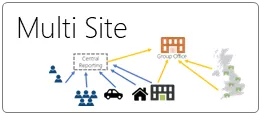
This affects NHS Trusts, Corporate Groups, Franchise Operations, Federations, and Out of Hours Services, in fact any organisation connected via common contract bids or as an integrated organisation, or under the umbrella of a branded service.

Control of Care

You have to register if any of the following apply to your Group or Federation:-

  • You exercise any form of control over care
  • Are involved in quality assurance of your members
  • Direct common policies and rules
  • Are involved in employment decisions in delivery of care or who is allowed to run the service

Groups, OOH & Federations

  • Independent providers to be inspected on same basis as NHS providers
  • Urgent care will be in focus, CQC looking for local variations in performance
  • Federations: New models to be introduced, not yet fully formulated

Adult Social Care

Every service will have a comprehensive inspection as standard
Organisations repeatedly rated as Requires Improvement MUST provide Action Plan of how and when they will get to Good rating
CQC will target management of 50% of your services rated as requires improvement or inadequate OR if there is significant concern with some members.


This will affect everyone

  1. Board members to be held accountable for performance.
  2. Failing locationa will trigger inspection of rest of group AND the head office.
  3. Your inspection report will now show that fellow members have failed.

The weakest link will drag down everyone in the Federation or Group, who will need to get a better handle on quality standards and ensure that EVERY member will pass CQC inspections.

If you are a member of such a group, you should be very concerned if any fellow member is not up to standard.

Effect on Board of Directors

The changes affect Groups, multi-discipline providers, and providers who are part of one Group/corporate entity.
If you are a board member, you need to be aware how individual members’ performance will now impact on your duties and responsibilities as a Board Member.

Quick snapshot for Head Offices:-

  1. Provider Level Assessment: Head office will go through a more formal audit and the Federation or Group given a “Provider-level assessment and rating based on member performance.
  2. Board members will be subject to KLOE assessment, primarily the Well-Led test, and held accountable for member failings.
  3. Targeting of the Federation if individual members are found to be inadequate or require improvement.
  4. Everyone’s inspection report will now mention failings of group members.

Your main hurdles

Performance variation and differing quality standards is the critical area to tackle. What makes this challenging is the absence of standardisation across the membership and lack of co-operation and shared standards between members.


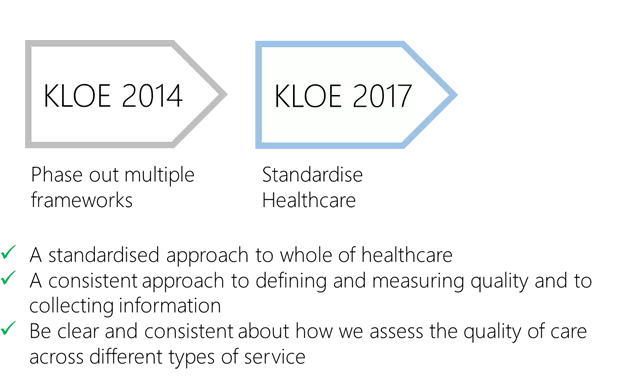
KLOE 2017 cqc plan


11 Frameworks down to 2: What this means for you

For the first time, a standardised approach to whole of healthcare
What the CQC want to achieve is:-

  1. A consistent approach to defining and measuring quality and to collecting information.
  2. Be clear and consistent about how we assess the quality of care across different types of service.
Rating Characteristics:

A standardised framework with a standardised rating system could have been an immense leap forward in healthcare standards and trust in CQC inspections.

Unfortunately it has an Achilles Heel that undermines the concept of comparability of the rating system.

The inspection is not designed to achieve an objective, measurable and replicable audit. It is impossible for an individual provider or even an expert independent auditor to carry out a self-assessment using these documents, and guarantee that the inspector will also come to the same conclusions. The “measurements” are frequently subjective measures such as whether you have been innovative enough, or have set yourself apart from similar providers. So in theory, a provider could be ‘outstanding’ but as soon as all others achieve the same standard, you are automatically demoted to the ordinary ‘Good’ status.

As before, when it comes to the dividing lines between Good Vs Outstanding, to a large extent you are at the mercy of the inspector of the day.

Targeted Approach

CQC says “Safety continued to be our biggest concern across all sectors – often influenced by the quality of leadership” so they will be focusing on:-

  1. Safety: We have used the learning from our inspections to strengthen a number of elements of safety, including recruitment practices, safeguarding, discrimination, medicines management, information sharing and management, and responding to external alerts and reviews.
  2. Leadership (Well-led): In strengthening our assessment of well-led, we are clear that there is a demonstrable link between leadership, culture and the delivery of safe, high-quality care, and our focus on well-led is intended to support and reinforce this link.

Lighter touch PIR – but not for most of you

The document speaks of light touch Provider Information Requests, by not asking for policies and intelligence before the inspection visit, however, this entire chapter only applies to Acute Trusts, and not to the vast majority of providers out there.

The SIX Themes

The new KLOEs include 6 themes that the CQC have deemed necessary to improve on, based on their experiences. Effectively this is just a summary of which sections contain new KLOEs.

  1. System leadership, integration and information-sharing
  2. Information governance and data security
  3. Technology: For efficiency, accessibility and more person-centred
  4. Medicines: Basically medicine management
  5. End of life care: Delivering good quality care at the end of life
  6. Personalisation, social action and the use of volunteers

What else?

In their statements of principles about why the framework is being changed, the CQC emphasises their role in seeking improvements and will be looking for providers to “demonstrate how they are developing and adapting to new evidence of good practice as well as the changing care landscape to improve the quality of that care”

The emphasis here is that you will be asked to show continuous improvement.


Save

YOU CAN DOWNLOAD KLOEs FROM THE TOOLKITS PAGE


Save

Save

Subcategories

New Single Assessment Framework 2024

Library of Regulations

SOLE TRADERS TO ENTERPRISES

Scalable solutions suitable for Providers of any size and trusted by well known brand names

customers NHS Nottingham Trust
customers ambient
customers livability
customers london medical
customers nuffield
customers qinetic
customers pearl chemist
customers renovo
customers ucl
customers vision
customers Berkshire Primary Care
customers Care at home
customers Circle health group
customers Cromwell hospital
customers Cygnet healthcare
customers NHS Halcyon Medical
customers NHS South West Yorkshire
customers NHS Torbay and south devon
customers North Hampshire urgent care
customers Nuffield health
customers Priory
customers Spire Bushy hospital
customers Trust Care Ltd
customers Urgent care Primary care 25
customers Winfield hospital
×

Login to your account

Don't have an account? Register Now