
A significant opportunity for Practices to share, collaborate, and save a fortune in the process
.... but it's not easy
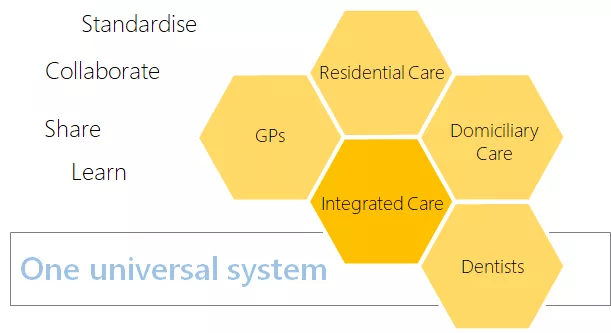
PCN Challenges
Duplicated effort in the industry
The traditional model for GP Practices has been to work in isolation, each one researching, drafting and working to their own customised policies and compliance standard. The most time consuming part is to engage with every single member of staff to ensure they have read and understood everything. Combine these two aspects and you get some idea of the enormous duplication of effort between member Practices.
An average practice with 20 staff could save between £12,500 and £15,000 in time if it followed a ready-made standard for policies, training, and compliance where the Practice Manager did no customisation and just followed a standard set by the PCN. Time saved does not result in cash in your hand, but it does make life less stressful and frees up resources for care rather than paperwork.
What most Providers are not aware of:-
- There is no requirement to customise policies - Even some inspectors don't know this
- You only need a maximum of 50 policies to comply with the regulations
- Simplified policies are acceptable and desirable for staff, and easier to share
- Hundreds of policies are great as a library, but try not to mix them up with your core standards
Organising PCNs
Organising as a PCNs presents a great opportunity for Practice Managers to refocus on how they can collaborate to reduce duplication.
However, this is easier said than done, here are some challenges:-
- Collating dozens of versions and getting agreement to a common draft is time consuming
- It is difficult to let go when you have spent 20 years honing your version
- Just one dissenter in the group can torpedo a project
A common problem is where the PCN or Federation lead does not have the authority to compel all members to follow the consensus of members. When a single dissenting voice can torpedo months of time and effort in a project, progress and improvement strategies can be slow, and innovation stifled.
The key requirement for moving forward, especially with innovation, is an assertive Team Leader with authority to make decisions.
Making a Business Case
Making a Business Case for a project is a good discipline that focuses everyone on the pros and cons, and the financial implications. It also makes the decision making process easier as any proposal or dissent has to be based on logic, the benefits easier to understand, and the project has a compelling baseline.
When making a financial evaluation, always take into account the invisible costs, ones that do not involve writing out a cheque.
Example of this hidden costs:-
- A system is cheaper but will take 10 times longer to set up and maintain
- You buy something that will save numerous hours of time during the year
- It seems more expensive but is less stressful to use
The real cost of Time
Once we are on a monthly wage, it becomes difficult to visualise the value of time.
This is easier to see if everyone in the organisation were on an hourly rate instead of a salary. A good approach to adopt is to put a value on everyone's time to easily see how productive everyone is compared to their cost.
Accountants and Lawyers are used to valuing their time as a charge rate and this type of decision making is easier for them to visualise as you can say "It will cost you a £500 but will save you £2,000 in chargeable time". This highlights invisible costs or benefits, and introduces the concept of "Opportunity cost"
What this means:-
- There is an invisible benefit of £1,500 you might miss
- Opportunity Cost: Your time is worth £2,000, don't waste it on low rate work
- It helps you focus on which tasks are worth doing yourself Vs what to delegate or outsource
Opportunity Cost
Everyone should be familiar with this powerful and valuable concept. It is invaluable when making choices, whether business or personal.
Here's a quick definition:-
"The loss of other alternatives when one alternative is chosen"
Federations
Federations tend towards a looser network and a less disciplined approach to enforcement.
The most common aspirations expressed are:-
- We want to collaborate
- We want to exchange ideas and share best practice
- We want to achieve efficiencies
Disadvantages of a decentralised system:-
- You cannot dictate what members must do
- No powers to issue directions
- No motivation/incentive for members to do as they are told
- A "voluntary" compliance model makes everything optional
Without the power to dictate standards, members make individual self-serving decisions rather than for the greater good of the network.
Benefits of Collaboration
Standardisation across a PCN
If you want to achieve anything from collaborating to sharing staff, you need to standardise as much as possible from the ground up.
Imagine if every one of Tesco's 7,000 stores had a slightly different policies, procedures and training. Managing quality standards would be a nightmare, and this principle applies even at a smaller scale.
Standardisation achieves:-
- Minimal duplication of effort
- Common quality standard for performance and contracts
- Exchangeability of staff and managers
- Efficiencies with resources
Shared and Roving Managers
Shared Managers can be full time or each Practice Manager making themselves available for say just a couple of hours every week to help others where needed.
Where finances permit, Roving Managers whether full time or part time will prove to be useful. These can easily be retired managers giving a few hours of their time to the PCN.
One full time Roving Manager should be able to look after 10 practices and maybe more if everyone has reached a good standard. Alternatively, 2-3 PCNs can band together to employ one Roving Manager between them.
Shared tasks:
- Troubleshooting
- Take up slack
- Emergency cover
- Manage staff training
Collaborative Quality Improvement
Organise a Quarterly PCN Compliance Review:-
Practice members can meet once a quarter to look at potential issues:-
- Iron out compliance anomalies
- Exchange ideas for preventions and improvement
- Agree an Action Plan for those falling behind
- Record the meeting as evidence of collaborative quality improvement
- Compile a report to the CQC inspector on status of the group, and improvement strategises.
- Raise questions for the inspector, if any
Manage PCN wide standards
Devise a strategy and system for managing performance across the PCN
Suggestions for systems:-
- A common risk register
- Common risk prevention system and strategy
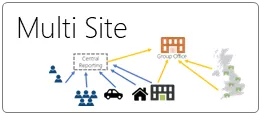
- A central reporting system for the Key Domains
Centralise Triage with PCN Call centre
Establishing a single inward bound call centre will enable better handling of appointments through triage, prioritisation, signposting and managing Patient Pathways.
This will ease up Reception workloads, allow better planning of inbound Patients, and result in improved face-to-face service.
This online triage team can focus their skillsets on being Care Navigators.
The entire service will benefit from a balanced and reduced workload and the care process will improve when Patients have a better understanding of signposting and care pathways.
Staff Training and Suitability
Staff management is your prime candidate for efficiencies and time savings.
If you have 10 members of staff, that's 10 times that everything is repeated, whether it is teaching policies, training or appraisals.
When you pool the numbers in a PCN, this could swell as high as 150 members of staff.
At this level, Group Training, Standardisation and Roving Managers will maximise your savings.
A self-sufficient workforce means a confident team that reduces the need for policing others and allows abetter focus on delivery of care
Manage Your Compliance
Manage your local inspector
Establish a good professional understanding with your local inspector so they have a clear idea of how the group operates and collaborates.
Agree some basic ground rules with the inspector. It will make inspections easier and will give them comfort about your PCN standards.
- Agree the standard: Show them your common system and agree what both sides should expect
- Explain your standard approach and how it works: Agree that this meets requirements and hear out concerns
- If you have a manager's manual on compliance, submit this copy for the record
- Share your experience with PCN members to help them prepare
For Groups with branches, aim for a single/combined audit where possible – This allows collaboration and to prepare together
Sync your Compliance Calendar
Set up a Compliance Calendar so that your group works in a co-ordinated way.
You cannot manage group-wide compliance if each location is working on different things at any given time and to a time-scale.
Benefits of a common calendar:-
- Everyone is doing the same thing, so you can share resources
- Now you only need one single plan for everyone
- Easier to manage projects and targets
- Faster compliance with whole group events
- Entire group moves forward at the same pace, no one left behind
- You know exactly where everyone is at any time
Co-ordinating your calendar will cut down the planning and managing workload to a fraction because you only need to do one single plan and share with everyone.
When it comes to an inspection, everyone will be at the same stage, with the same compliance plan, so there's less to explain and more in common
Significant Event Audits and Revalidation with less effort
PCNs can take advantage of being in a group by pooling resources and having just one set of Significant Event Audits between them.
Common problems with organising SEAs:-
- Finding the topics to investigate
- Getting material together
- Co-ordinating discussions
Shared SEAs, a PCN-wide solution:-
- Create a common shared register of candidate topics
- Select the top 3-5 topics for all members to audit
- Share the material with everyone in the group at the same time
- Organise a single event to discuss this or each location does their own and shares the findings
- Exchange notes and findings with everyone
The aim should be to complete say 5 shared SEAs from a ready-made list of topics. Members have the option to tackle more at their option.
SEAs should be about both positive and negative events that we learn from, and a common misconception is that these should be "incidents" and negative events.
Benefits and Achievements:-
- A single SEA topic is now covered between 5-7 members
- Substantial time saving
- Achieves CQC compliance
- Achieves revalidation
- Demonstrates shared collaborative learning.
Just one set of Policies and Protocols
Using the Tesco analogy again, imagine if Tesco made every branch draft their own custom their own policies and protocols. They'd all be similar but not quite the same, and you would never know if the standard of service was the same between one branch and another.
PCNs allow an opportunity to share a common set of policies, drastically cutting down the effort required to keep this up to date and demonstrating to the CQC that everyone is working to the same standard of service.
Benefits of a common standard:-
- Shared resources mean substantially less work
- Demonstrates shared learning and collaboration
- Collaboration demonstrates everyone is following best practice
- Nothing left for the CQC to review at an inspection
Create a central Risk Register
Working as a group, you now have 5 to 7 times the resources you had before.
Benefits of a central Risk Register:-
- Easier to identify incidents and provide proactive support.
- When things go wrong, a collaborative approach will get faster results to fixing things.
- Instant learning from other people's experience instead of learning from own mistakes.
- Less stress and anxiety if you know help is at hand.
- Access to other people's experience results in faster problem solving
What a Risk Register should cover:-
- Any incidents where something went wrong
- Record of actual harm
- Never incidents and near misses
- Remedial action
- Prevention measures, sharing, learning and improvement